|
|
||||||||||||||||||||||||||||||||||
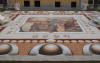
Corpus ChristiCorpus Christi (the Catholic feast celebrating the presence of the body of Christ in the holy wafer) is held in June, beginning on the Thursday after Trinity Sunday. A solemn and magnificent procession bears the consecrated host through the streets. The Corpus Christi festival was created in 1246 in Liege, Belgium, and after the Archbishop of that town was elected Pope it was later adopted throughout Europe. It reached Toledo 1280 and in Sevilla 1282 and all Spain by XIV century. During the procession the casket containing the holy sacrament is processed through the streets and a mass is celebrated in front of the Ayuntamiento (town hall). In La Orotava the local people cover the processional route with carpets (alfombras) of flowers and volcanic sand collected from El Teide. The main display in front of the town hall takes over two months to create and the design is a well-kept secret until the day of the festival. All of this hard work is destroyed as the dignitaries shuffle through the carpets. The San Isidro romaria has been celebrated in La Orotava ever since the second half of the 17th century but is a continuation of older pagan festivals . Formerly a festival for field hands and farmers, held on the 15th of May in the church of Nuestra Señora de la Piedad, on the outskirts of town, the fiesta was first devoted to San Isidro Agrícola in the 17th century. The fiestas have changed profoundly since then from being a tribute by field hands to their Patron Saint to a mix of religious devotion and general carousing. The fiesta is now held in June and the most popular events are the livestock fair, the popular pilgrimage and final parade. Carts are pulled by oxen, people wearing traditional country costume hand out food and drink and the people of the town decorate their balconies and windows with carpets, table cloths and shawls. The fiesta of El Sol or San Juan takes place on the 22 June. Fires are lit all over the island to celebrate midsummer and everyone sets up camp on the beach watching the fires, taking a swim in the sea (for good luck - this is when many Tenerife babies have their first dip in the water) and waiting for the sun to come up. The following morning, those who are up and about, can witness the baño de las cabras (goat dip) which is held in memory of an aboriginal fiesta held by the Guanches to celebrate the summer solstice. The local women come with buckets and bottles and the goat herders milk the goats on the beach by the port. The goats, horses and dogs take a bath (some more willingly than others) - and the humans crack open the first beer of the day.
|
||||||||||||||||||||||||||||||||||